
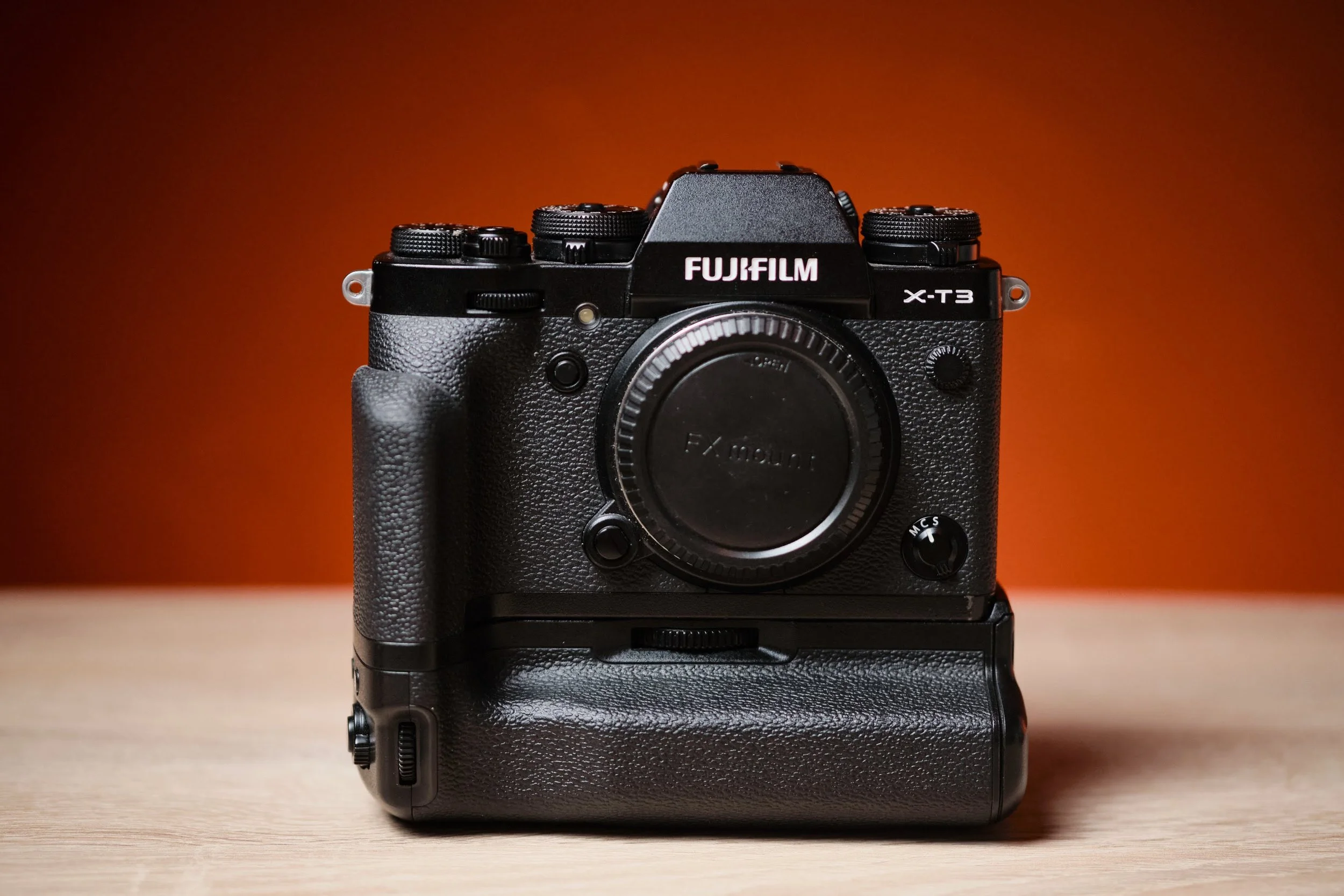
Using the FujiFilm X-T3 in 2022
Is the FujiFilm X-T3 still a relevant camera in 2022 ?




Based on the last two reviews of the FujiFilm X-H1 and the FujiFilm X-T30 I think you know how I feel about FujiFilm overall as a brand. I love FujiFilm, and I think one of the most interesting aspects of owning a Fuji camera is that you just want to carry it with you and shoot with it, that in itself is more important than image quality and usability, especially when you are a working Photographer and/or Filmmaker, you need a piece of gear that can ignite in you the passion of taking pictures for fun. So, with this argument out of the way, how is the experience of using a FujiFilm X-T3 as a working Photographer and or Filmmaker? Well, it depends!
As a working Filmmaker/Photographer myself I can say that my experience with the FujiFilm X-T3 is one of fun and frustration, the same frustrating hiccups that plagued my experience using the X-H1 in a professional setting with, dare I say it, less fun.
The FujiFilm X-T3 is a great camera, especially for the price, it is really hard to beat a beautiful-looking APS-C sensor with 4K 60p 10bit and very lovely image quality at that price range.
The following is my summary of using the X-T3 in a professional setting, I would like to add that my experience using this camera to document my life and for personal projects is one of pure joy and fun and that I miss my X-T3 already.
The Good :
The Body: Let’s start with the obvious, this camera will make people talk to you and ask about it, you don’t always encounter FujiFilm shooters in professional sets and especially for video (at least in my country), plus the camera is beautifully made, a joy to use and to own (not always, we will talk about it later). The camera is very small, which makes it a very portable yet powerful camera to carry around. It is also perfect for projects where you need to quickly shoot in a location without attracting too much attention and without sacrificing image quality.
The overall image quality: it is no secret that Fujifilm had created a very special sauce to spice up their images. In the right conditions (we will get back to this point later), the images and videos are stunning, beautifully detailed with a lovely dynamic range, the colors are special and they make your videos and images stand out from the crowd.
Video quality and recording options: X-T3 makes the filmmaker in you a happy person, you have a plethora of recording options that you can easily access at any given time without delving deep into convoluted menus. I am not a big slow-mo guy but when I do slow-mo I rarely exceed 60p and the 4K 60p in this camera is as good as its 24p, especially when shooting in 10 bit 4:2:0, The 10 bit is solid and it is a must when shooting F-log ( we will go back to this point later). F-Log is a solid log profile that gives you enough DR to play with, it is as good as it can be in an APS-C sensor.
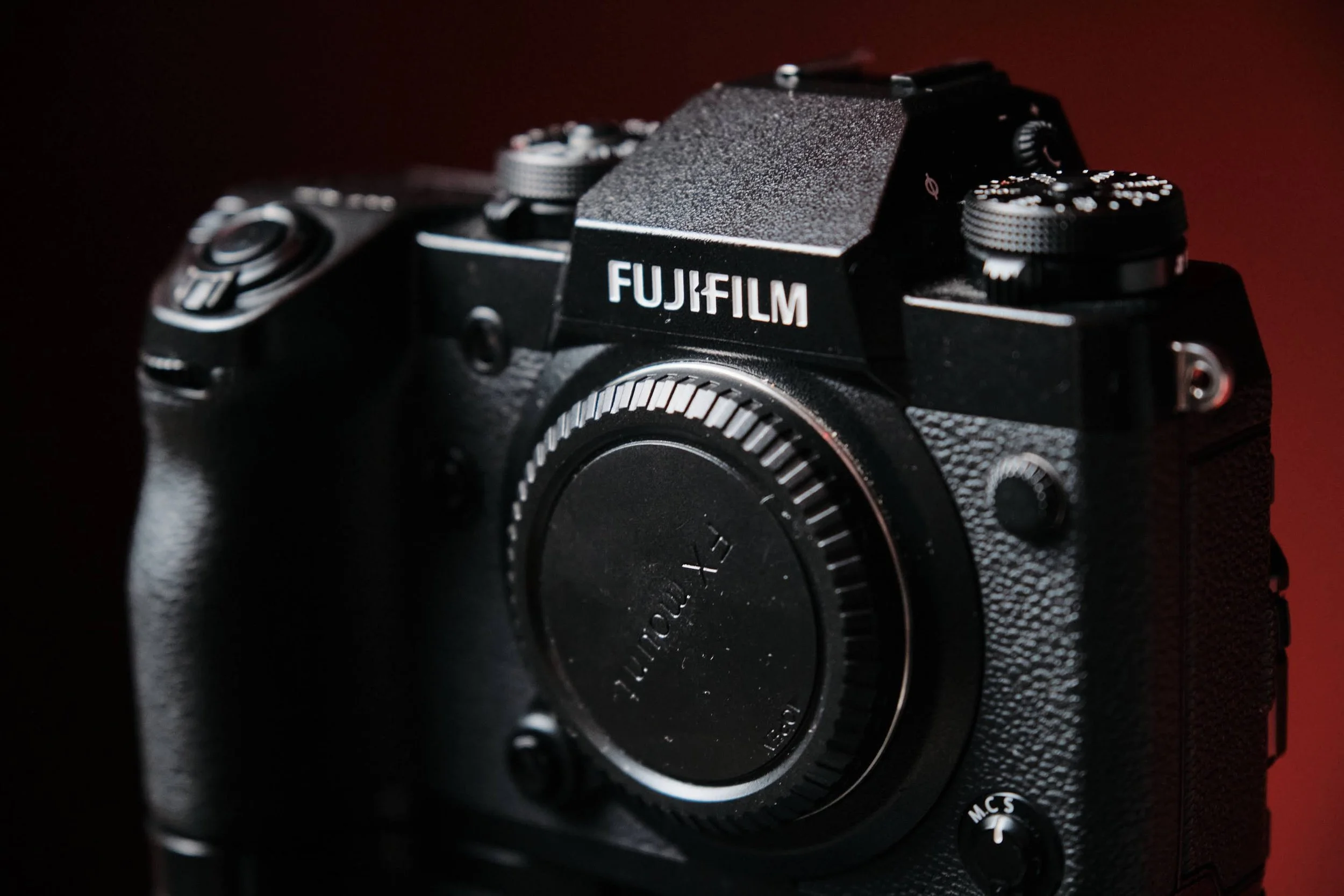
Using the FujiFilm X-H1 for Video?
Is the FujiFilm X-H1 a viable option for Video in 2021?
Make no mistake, the FujiFilm X-H1 is primarily an amazing photography camera with some good video capabilities, but so is the Sony A7 III, arguably the most used Mirrorless for video, so why not using the FujiFilm as a Mirrorless video camera? And for half the price of an A7 III what are we missing?


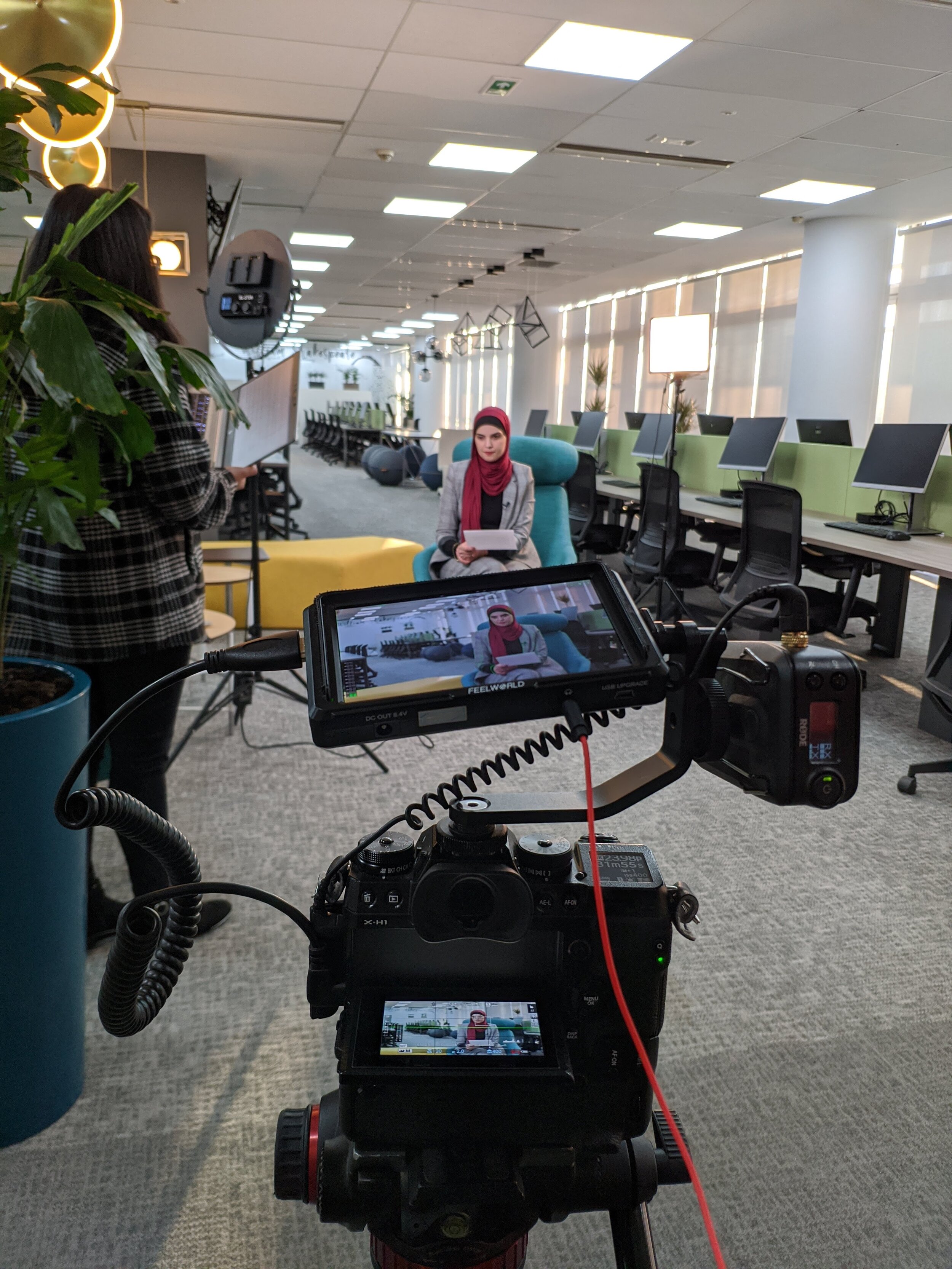
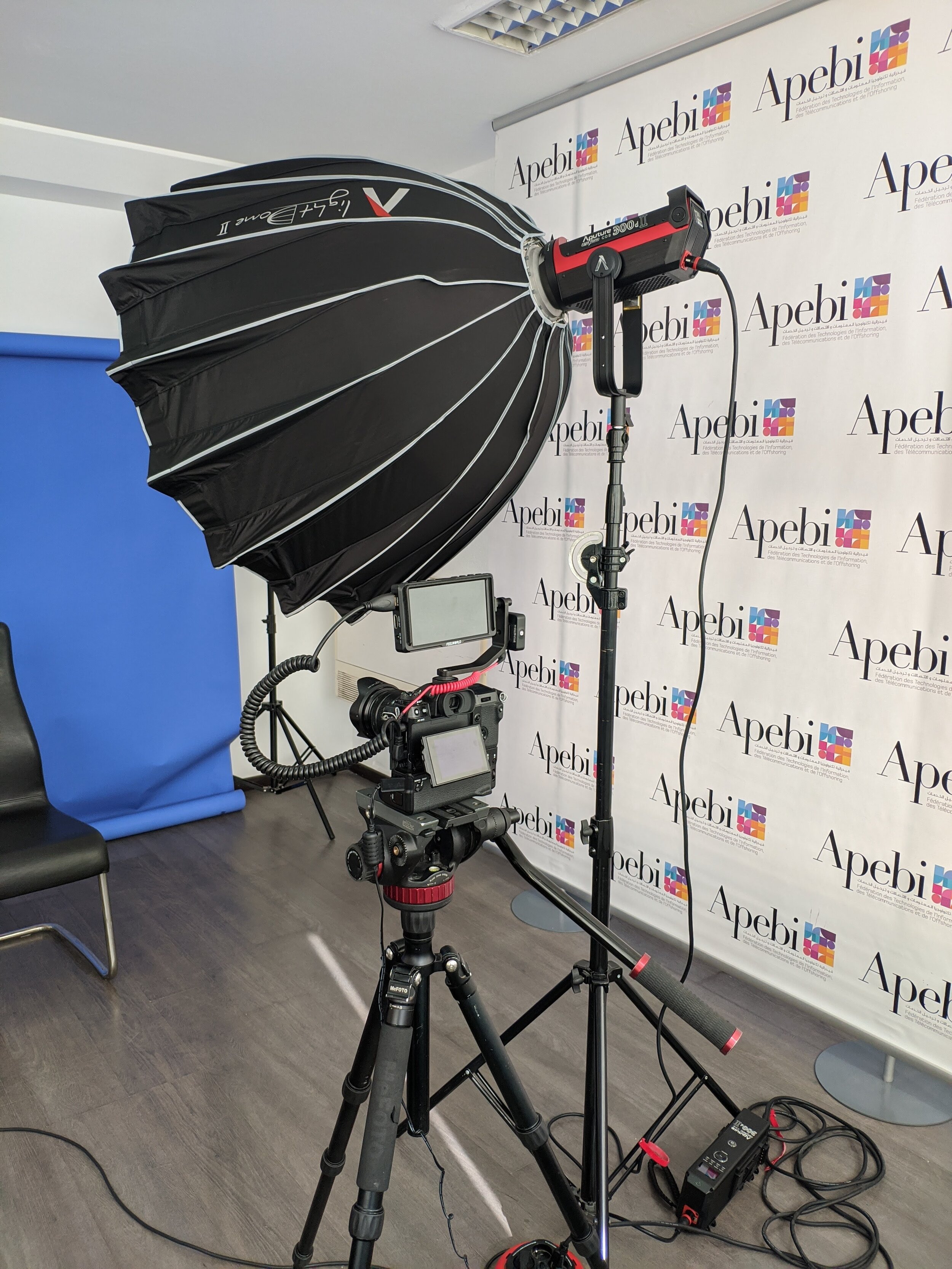
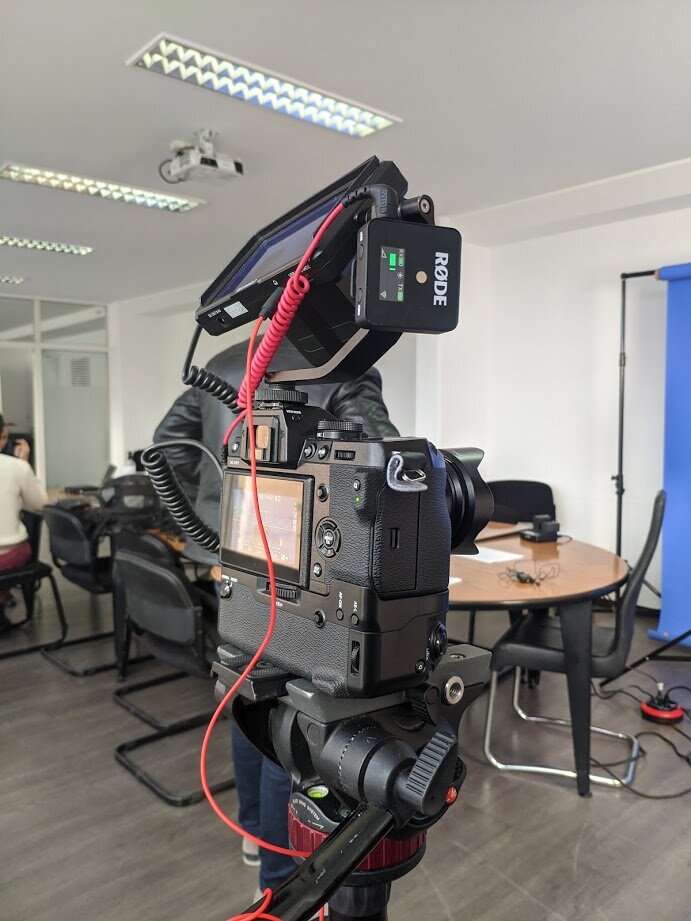
For what it offers, the Fujifilm X-H1 is a very cheap Camera, I got mine brand new at 800 USD with the grip and 3 batteries. For an APS-C camera with great handlings, 4K 200 Mbps, 120 fps FHD, F-Log and amazing Picture profiles with great colors, a decent AutoFocus, and one of the best IBIS in the market, that’s a very appealing package! So where is the catch? In reality, if you learn your way around the quirks of the camera, it’s a great deal, but what are the quirks of the X-H1?
1- The 4k: Although an oversampled and beautiful well-detailed 4k, it suffers from one big problem: 1.17x crop. WHY FUJI? Does that make it unusable? Not really, if I don’t find myself shooting in very tight situations, I don’t really mind the crop, and I never really felt it, especially because I am learning to shoot less wide than I used to, the Samyang 12 mm is a cheap and great focal length for those tight situations, and unlike the A7 III the 1080p is very much usable, it also has no crop.
2- F-Log: It’s great to have F-log, right? Well if you have the X-T3 and shoot in 10 bit, yes, but not with Fuji’s 8-bit codec. The F-log has a great dynamic range and it is similar to S-log in many ways, but where F-log fails is where S-log shines, it works fine with Sony’s 8-bit cameras. Yes, you face the occasional banding here and there, but the colors don’t fall apart as quickly as with Fuji’s 8 bit. Fortunately, FujiFilm’s Eterna is really great, flat enough, easy to grade, and doesn’t destroy the 8-bit image, and you can even select what Dynamic Range you want so that even if you are not shooting F-log you get most of the sensor’s DR, although it should be used consciously as I find the highest DR setting (400) to sometimes produce unnatural results with skin tones.
3- Battery Grip: I don’t know how to feel about this problem, it’s a big downside that doesn’t really affect me! FujiFilm had the brilliant idea to make the Headphone Jack in the battery grip, so if you want any kind of monitoring you need the Grip attached, which is lame! Also, the Grip extends the recording time of the X-H1 from a meager 15 minutes to the typical 30 minutes limit in 4K and enables Boost mod which makes the IBIS and AF behave a little better in my testings. Those are annoying issues of course, but as a person who likes a heavy camera for video work, I actually like the grip and I always use it, so those issues do not bother me personally. The grip has also this cool feature, you can plug it into the wall which is great for interviews as you never run out of batteries, speaking of batteries…
4- Battery life: Another reason to get the grip? The battery life is BAD, especially with 4k. While still very bad compared to what the new-gen Sony and Panasonic and the X-T4 are offering now, it’s still better than the old Sony batteries, those were awful, we used to have 10 batteries with the A7s, and I was lately in a shoot with the A7s II and it was a nightmare. With Fuji, 5 batteries are more than enough for a full day, even less if you can plug the Grip into the wall.
5- Autofocus: The AF is not bad, it’s just not reliable and it is not on the same level as Sony’s or Canon’s AF. Even the recent FujiFilm releases have better AF. So you can make it work in some situations, but it’s nothing to write home about.
6- Low-Light: Well, it’s an APS-C Sensor, and for an APS-C sensor it’s quite good, but again, not Sony’s good, but it is definitely ranking higher than Canon’s EOS R full-frame sensor (I tested it) in video and Panasonic M4/3. So it is not really a downside, but if you compare it to similarly priced Sony APS-C cameras it becomes a small one.
Here is an example of the FujiFilm X-H1 used professionally with the Sony A7 III.
As you can see, in order for you to use the FujiFilm X-H1 for video, you have to overcome those issues, especially if you are coming from a Sony Mirrorless you will be frustrated at times, after all, Fuji is very new to the video Mirrorless race. But unlike similarly priced Sony Cameras, you get top tier IBIS built in a DSLR looking body with amazing ergonomics, dual SD cards (although you can’t dual record Video files), a very compact lens selection that makes for the bulkiness of the body, and a wide range of picture profiles and profile customization that produce a very lovely image.
So is the FujiFilm X-H1 good for video? Yeah, you can make it work if you really want to.
Here are some additional points to keep in mind:
The Video limit for continuous recording is 30 minutes, but if you have the grip attached, whenever a battery is getting empty the recording stops to switch to the next battery even if you are 10 seconds in the recording. That is most definitely a glitch, as for the camera to use the next battery it has to stop any recording.
The shutter button is great for photography, it’s actually one of the best shutter buttons I used in my life, but it is very sensitive and sometimes it can start or stop recording in the video if you touch it inadvertently.
Sometimes you may encounter a glitch in the menu or while using the camera, just remove the battery and you will be good.
There is no real difference between 4k 100 Mbps and 200 Mbps, so I would always keep it at 100 Mbps.
If you have a problem adjusting your ISO or Shutter speed settings, it’s probably because of the top dials, they might have been set to the wrong values ( that needs some getting used to if you are coming from Cameras with no top dials for settings )
Using the FujiFilm X-T30 for Video?
I have a love-hate relationship with the FujiFilm XT-30, let me explain.
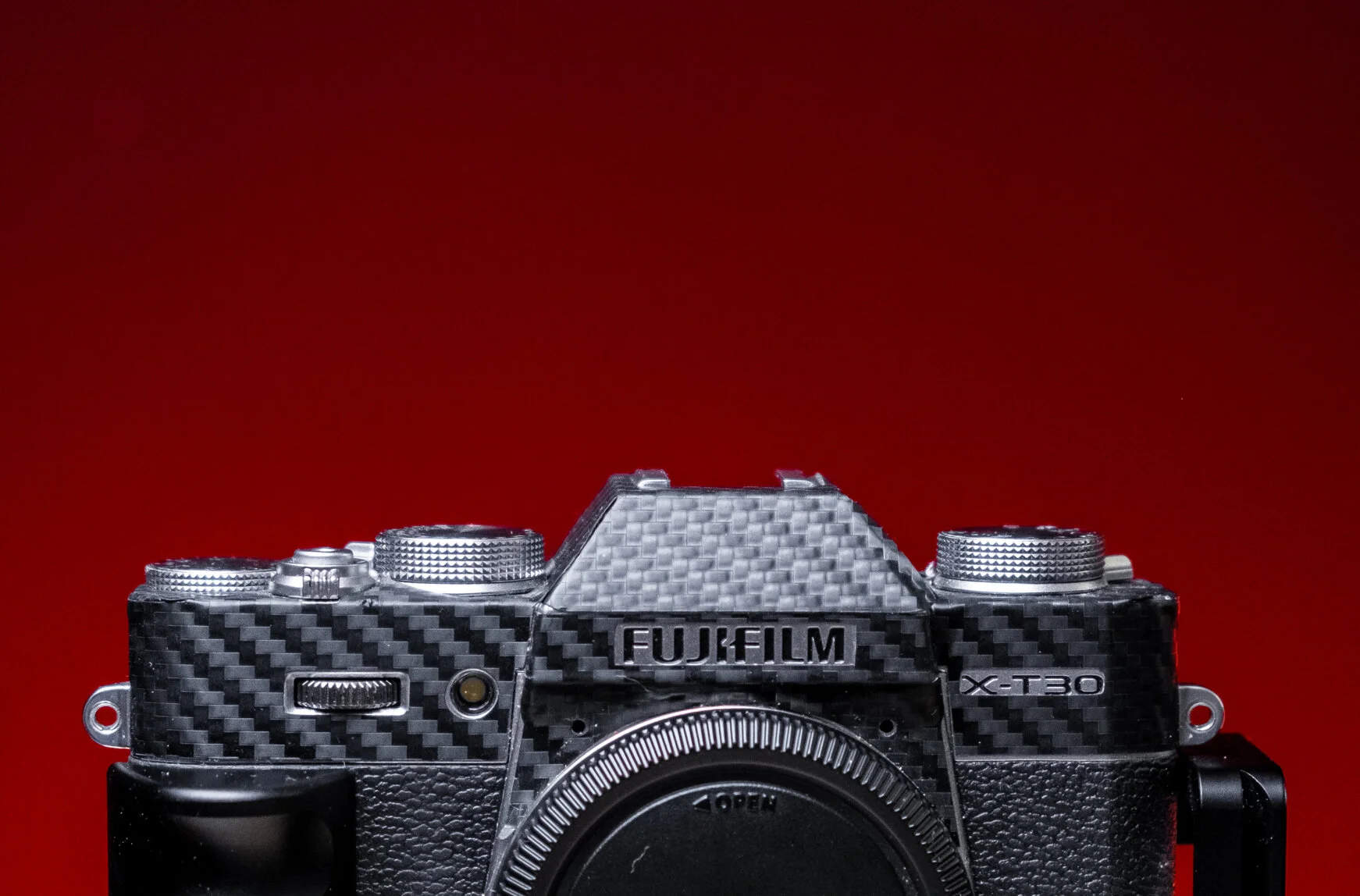
The FujiFilm X-T30 is a small lightweight APS-C body that has some incredible specs inside. It has basically the same sensor as its big brother the famous FujiFilm X-T3 and can produce similar images, that in itself is a big deal. As a Photography camera, it’s an amazing piece of equipment, perfect for street photography, travel, and even for events and other commissioned work.




However I’m going to focus on the video aspect of this camera, the FujiFilm X-T30 can shoot 4k 30fps and 1080p at 120 fps all in 8bit 420 and up to 200 Mbps. It can also record 10-bit, 4:2:2 DCI 4K video via HDMI. Amazing right? F-Log, Autofocus enabled even in 1080 120 fps, eye autofocus, Film simulations with great colors, where is the catch? Well, first, basically all the video mods are limited, 10 minutes for 4K and 15 minutes for HD. To be honest, that doesn’t bother me much as I use the camera for quick B-rolls no longer than 1 minute. This can be avoided by using an external monitor to record the beautiful 10-bit 422 DCI 4K, but the recorder itself is probably more expensive than the camera, which defies the point of using the X-T30 for video in the first place.
So how is the image? it’s a pretty decent and well-balanced image, a great dynamic range (if you use the DR 400 setting, which limits your minimum ISO to 640), and a lot of details in the 4k and the 1080p files (the 1080 is detailed but with a lot of moire and aliasing, it’s not an A7s 1080p). It is not as great as the X-T3 10 bit files, but those are very taxing on the computer. It can be both easy and hard to grade, it depends on the lighting situation and on your settings. The image sometimes has a strong magenta tint to it, and in some situations makes it look very digital, but overall, it’s a pretty solid image.
What made my relationship with this camera a love-hate relationship are three different points: User experience, lowlight capabilities, and lenses.
I shot this video with the Fuji X-T30, all handheld in 120fps 1080p using the FUJIFILM XF 18-55mm f/2.8-4 R LM OIS.
1- User experience: This is my main issue with this camera. It is very small, which makes it very fiddly to use. You can easily press the wrong button (I see you Q button, I see you very well) and it is kind of awkward to hold and operate. Granted, those points start to disappear the more you use the camera, but they exist nonetheless. The touchscreen is unpredictable and sometimes pretty unusable. Sometimes, the settings Dials are just buggy and won’t operate normally and you have to turn off the camera for them to reset and be usable again. The analog dial for the shutter speed is cool, but not practical, and can sometimes be annoying. The AF is not always spot-on and in many instances might ruin your shot by the constant hunting and pulsing … or by face locking on a rock or a tree, that happened to me. In short, many of these issues are not native to the X-T30 only but can be found in many FujiFilm bodies (the X-T3 for instance shares many of these quirks with its little sister), and they stem mostly from a lack of consistency in the user experience. Coming from Canon and Sony, what’s great about for example the A7III or the Canon C100 is that they give you consistent results whether in the image or in the camera behavior, which makes them more suitable for professional environments. That being said, those quirks can be deal-breakers for some and manageable for others, it all depends on how you use the camera and for what purpose.
The image in this video is SOOC, because Youness didn’t apply any color correcting or grading.
2- Lowlight capabilities: Again, coming from the Canon C-line and Sony A7 series, it’s very hard to get used to almost unusable images at 6400 ISO. The noise performance is decent for an APS-C camera, but I find that the images quickly lose details when pushing the ISO values. 6400 ISO can definitely be used if exposed correctly, the noise pattern looks more film grain than digital noise which is a good thing, but you really have to pay extra attention when reaching high ISO (starting from 3200 ISO), you may end up with more unusable footage than you think. It also doesn’t help that ISO Values in FujiFilm are 1 stop darker than those in Sony. So even if it’s not bad per se, it's not the best when compared to what other brands offer. That being said, if you pay attention to the exposure and have enough light hitting your sensor, you can
3- Lenses: FujiFilm Lenses are actually great, the F/2 lenses are small, sharp, and reasonably priced. The 18-55 F2,8/4 is an amazing kit lens with great image stabilization. The problem is that those lenses are not the best for video, some have very slow video AF, and all are not great for manual focusing. And on top of all, you don’t have many choices to pick from, and the Fringer adapter (the only good lens adapter) is expensive. So, the lenses are great, if only we had more options for video (and even for photography) or more accessible adapters.
I would like to add that vlogging with the Fuji X-T30 is possible but not convenient ( no flip LCD, AF is ok at detecting faces).
Where does that leave us in regard to shooting videos in the FujiFilm X-T30? If those quirks are no deal breakers for you, and if you want a camera that produces stunning Jpegs and has a very nice and detailed 4K image and 120 fps 1080p all in a small lightweight and low-profile body that you can always carry with you without selling your kidney for it, then I guess the X-T30 is a great little camera that can easily make its way into your heart. I got mine for around 600 USD used with 2 lenses, it’s a bargain !
Is the Canon C100 still relevant in 2020 ?
Is the C100 still relevant in the 2020’s landscape of cameras?
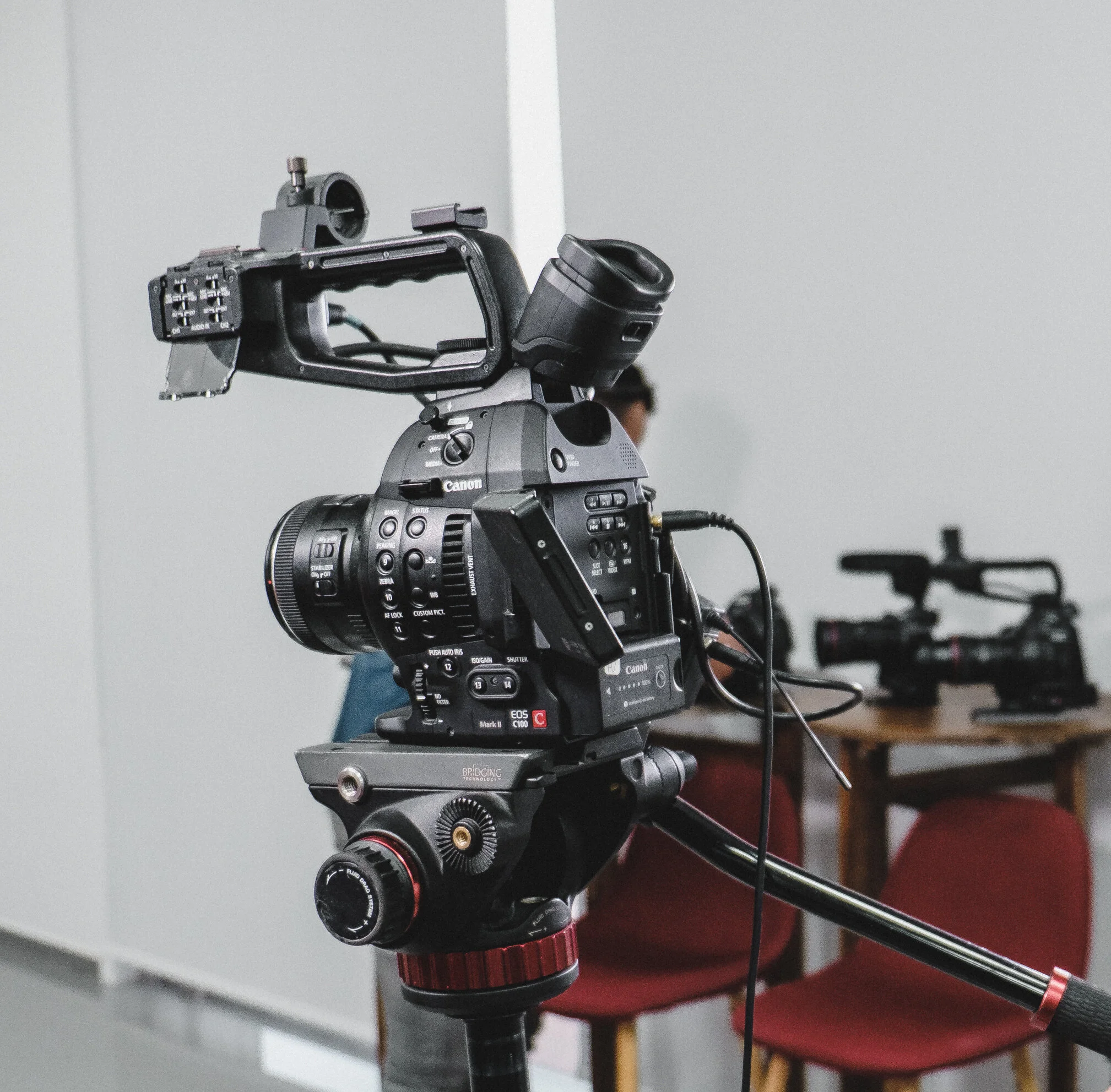
As a company, we work mainly in the Corporate world, we do own the Canon C100 both Mark I and Mark II as well as the Sony A7 III, A7S, and A6300 (and I recently bought a Fuji XT30 for personal use, I will write a future blog post about it) we learned to match the image of the Canon and the Sony to 80% in most situations. Since we bought the A7S we fell in love with Sony and the Sony image (other than the harsh highlight roll-off, the colors were pretty accurate, we slightly modified the S-log in the A7s to reduce the infamous green tint), S-Log is also great to play with if exposed correctly, although it requires a lot of finesse to make it look good* (*I'm not a professional colorist by any stretch of the imagination). Long story short, we decided to go for a proper video camera because we were fed up with the “fiddliness” of DSLRs and mirror-less in the video department (that was after a very frustrating job that we almost failed).


The logical Camera was the Sony FS5, but at the time it was a little bit out of our budget and I didn't like its performance in low light situations and we were (and still) doing a lot of low light shooting. So I started considering the C100, I used to hate the camera for the specs that it offered, 1080p at a mere 24 MB/s AVCHD 8 bit 420, no slow-motion option at all (you can only hack the 60i in the NLE, not good tho), even my 5D III did better in the specs sheet, but it has the dual XLR input, the unlimited recording, the ND filters, an amazing battery, good low light, and it was within our budget, so I went for it planning to use it for specific situations, but little did I know it will become the most used camera in our gear arsenal, it just WORKED! The image is beautiful, although you can't stretch it as you please, it does look more expensive than what it is if used properly, the 1080p is very detailed (downscaled 4k capture), the codec is efficient, remember the 24 MB/s? it's actually a blessing and a money saver, especially for the type of work that we do where we tend to shoot a lot and where we do not charge a lot of money. The C100 just makes you focus on the craft and on the story thanks to the ease of use and the lack of shooting options (yes, you can see that as a positive). I also learned to shoot more handheld and on sticks which was refreshing considering these are the heydays of running with gimbals and stabilizers. So last year when I wanted to upgrade our C100 after 2 years of service I went for the C100 mark II even if for the same price I could have bought the FS5, but I went for the C100 Mark II so I can keep the same workflow. The AF is a game-changer and I don't think I can live without a good AF system in my Camera from now on ( I didn't have the AF upgrade in my original C100), the 60p is beautiful, more beautiful than most of the 60p I used in other cameras, the image is slightly better than the C100 (PS, it is not straight forward to match the C100 and C100 II image) and the Screen & EVF are miles better. The image matched the A7 III 4k in a 1080p timeline and for a fraction of the file size of a 4K file. I forgot to mention that the C100 makes you save some money by going for EF-S lenses instead of FF lenses, I sold my Canon 24-70 2,8/16-35 2,8/100 2,8 L (I regret selling this one) and went for a 17-55 2,8 and a... kept the change ;). In short, I was quite happy with the whole C100 system and workflow, until I was not...
This was a frustrating shooting. The C100 codec struggles a lot with scenes that have a lot of details like trees and foliage. Also the dynamic range of the sensor is not the best.
You see, we are looking to upgrade to a more feature-packed Cinema Camera because I think we reached the limits of the C100 mark II, and it is sometimes limiting our creativity in some projects. The C100’s codec is a blessing from a business standpoint, but you can only do much with the file before it falls apart. The Dynamic range in the C100 is ok but not great, thus limiting our options when framing and lighting. Considering these issues, we believe the C200 is the logical upgrade because you have the best of the two worlds (small MP4 + Robust 12 bit RAW) and the C200 is probably going down after the release of the C300 mark III and the C500 mark II.
While this is our current situation with the C100, I believe that the C100 system is underrated and that a lot of filmmakers (especially the ones starting their journey) should really consider the C100 because of how cheap and professional the whole workflow is: Cheap Camera, cheap Cards, cheap storage, cheap computer for editing, cheap lenses, no need for extra equipment, easy to grade image = less time editing= you can work more projects at the same time, etc... Plus it is a proper video camera that won’t let you down in critical situations -no overheating, no recording limit, no need to change the battery every 5 minutes, dual SD recording for backup, dual XLR …

Other than the last slow-motion graduation shot at the end filmed with the A7 III and a couple of GoPro shots, the rest of this collage is shot with the C100 Mark I and Mark II. It’s not amazing by any means, but it is enough for this kind of productions.
So, to answer the title’s question, is the Canon C100 still relevant in 2020? I believe it is, especially the C100 mark II, and I believe that a lot of small productions will benefit more from a C100 than an A7 III for example. If you are doing a lot of Interviews, low budget Documentaries, and Corporate work, low light shooting, and if your clients don’t need 4K delivery and don’t have specific delivery standards, then you should consider going for a Canon C100 Mark II, It is a joy to shoot with, it’s truly an amazing camera.