
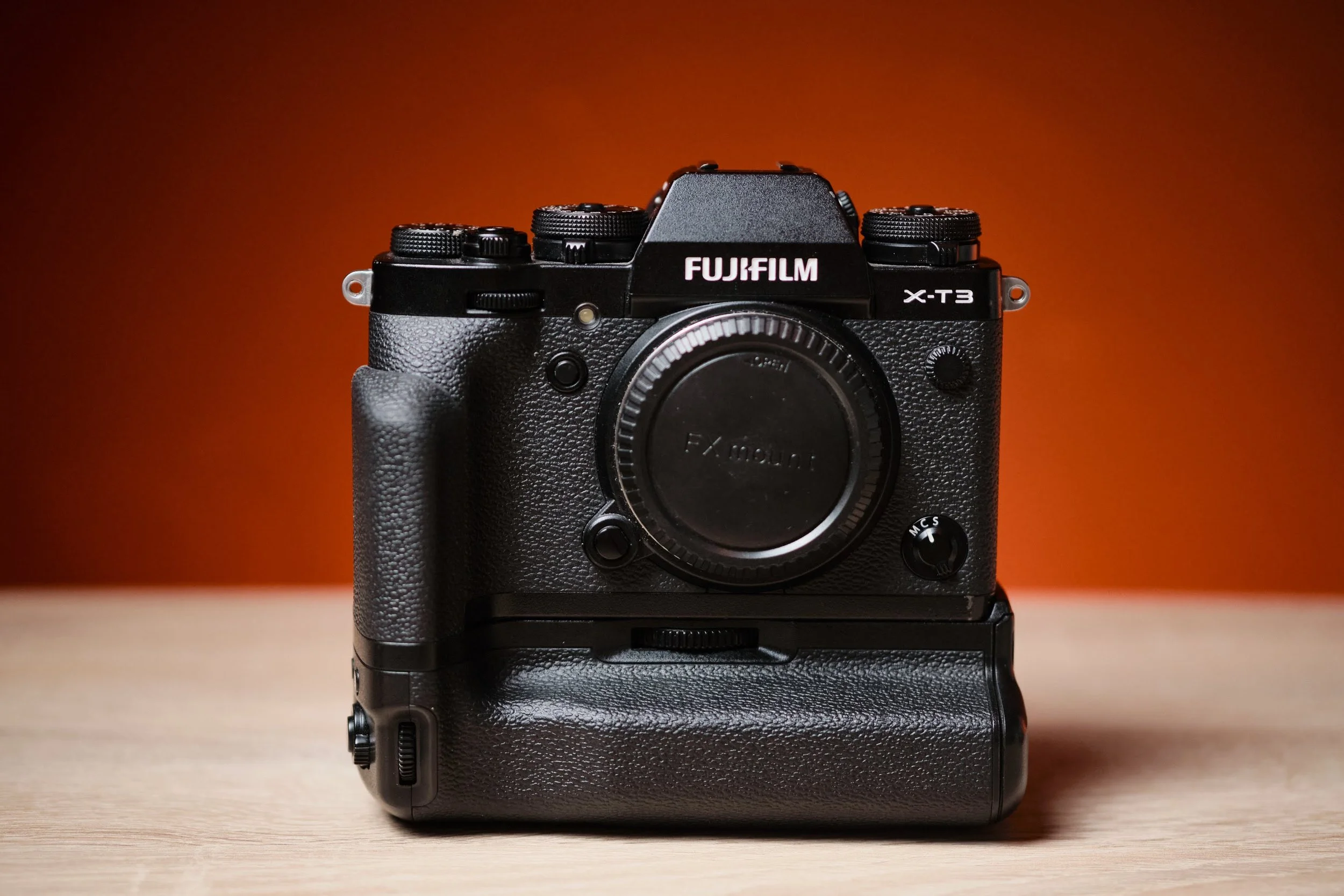
Using the FujiFilm X-T3 in 2022
Is the FujiFilm X-T3 still a relevant camera in 2022 ?




Based on the last two reviews of the FujiFilm X-H1 and the FujiFilm X-T30 I think you know how I feel about FujiFilm overall as a brand. I love FujiFilm, and I think one of the most interesting aspects of owning a Fuji camera is that you just want to carry it with you and shoot with it, that in itself is more important than image quality and usability, especially when you are a working Photographer and/or Filmmaker, you need a piece of gear that can ignite in you the passion of taking pictures for fun. So, with this argument out of the way, how is the experience of using a FujiFilm X-T3 as a working Photographer and or Filmmaker? Well, it depends!
As a working Filmmaker/Photographer myself I can say that my experience with the FujiFilm X-T3 is one of fun and frustration, the same frustrating hiccups that plagued my experience using the X-H1 in a professional setting with, dare I say it, less fun.
The FujiFilm X-T3 is a great camera, especially for the price, it is really hard to beat a beautiful-looking APS-C sensor with 4K 60p 10bit and very lovely image quality at that price range.
The following is my summary of using the X-T3 in a professional setting, I would like to add that my experience using this camera to document my life and for personal projects is one of pure joy and fun and that I miss my X-T3 already.
The Good :
The Body: Let’s start with the obvious, this camera will make people talk to you and ask about it, you don’t always encounter FujiFilm shooters in professional sets and especially for video (at least in my country), plus the camera is beautifully made, a joy to use and to own (not always, we will talk about it later). The camera is very small, which makes it a very portable yet powerful camera to carry around. It is also perfect for projects where you need to quickly shoot in a location without attracting too much attention and without sacrificing image quality.
The overall image quality: it is no secret that Fujifilm had created a very special sauce to spice up their images. In the right conditions (we will get back to this point later), the images and videos are stunning, beautifully detailed with a lovely dynamic range, the colors are special and they make your videos and images stand out from the crowd.
Video quality and recording options: X-T3 makes the filmmaker in you a happy person, you have a plethora of recording options that you can easily access at any given time without delving deep into convoluted menus. I am not a big slow-mo guy but when I do slow-mo I rarely exceed 60p and the 4K 60p in this camera is as good as its 24p, especially when shooting in 10 bit 4:2:0, The 10 bit is solid and it is a must when shooting F-log ( we will go back to this point later). F-Log is a solid log profile that gives you enough DR to play with, it is as good as it can be in an APS-C sensor.
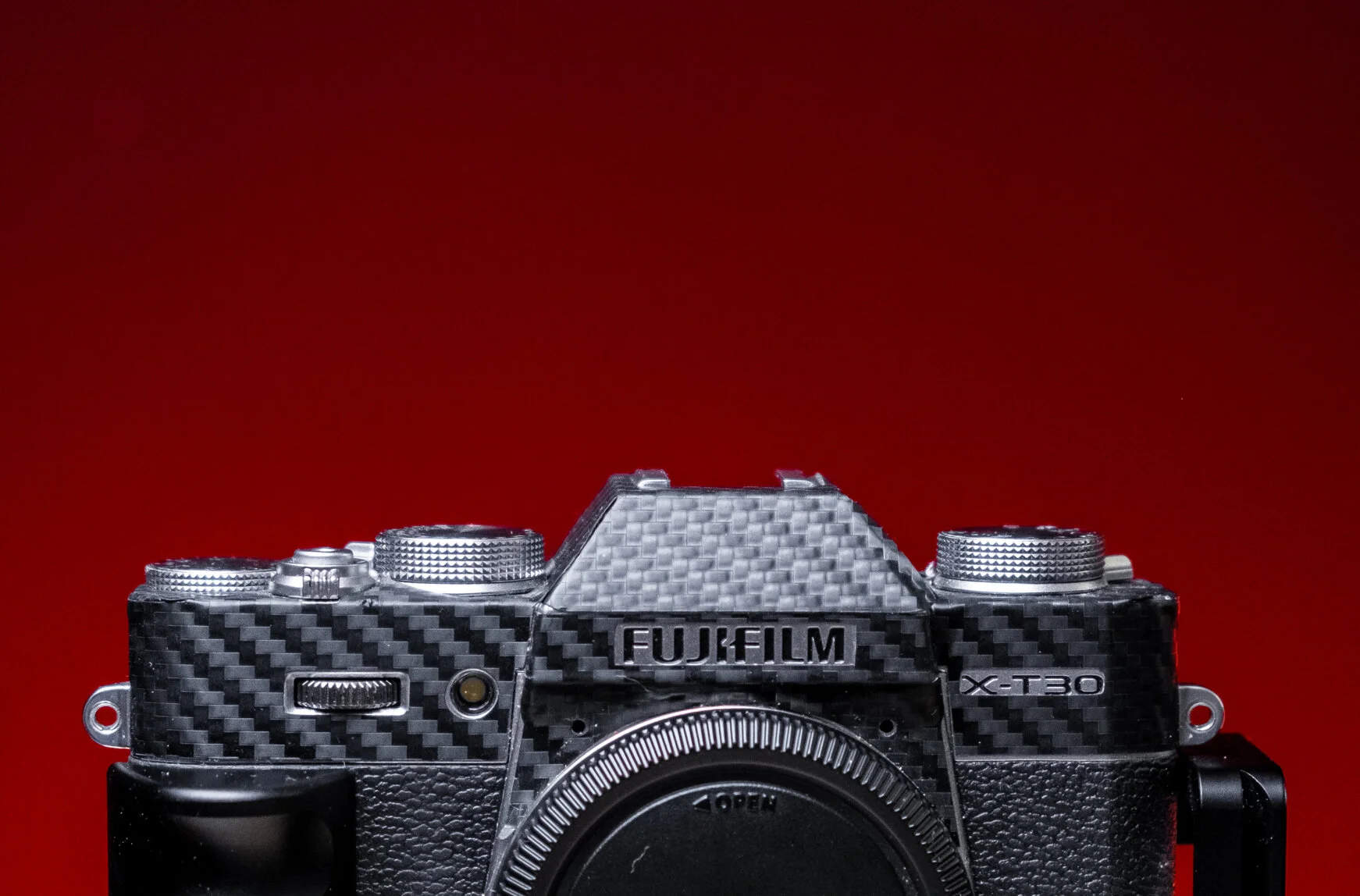
Using the FujiFilm X-T30 for Video?
I have a love-hate relationship with the FujiFilm XT-30, let me explain.
The FujiFilm X-T30 is a small lightweight APS-C body that has some incredible specs inside. It has basically the same sensor as its big brother the famous FujiFilm X-T3 and can produce similar images, that in itself is a big deal. As a Photography camera, it’s an amazing piece of equipment, perfect for street photography, travel, and even for events and other commissioned work.




However I’m going to focus on the video aspect of this camera, the FujiFilm X-T30 can shoot 4k 30fps and 1080p at 120 fps all in 8bit 420 and up to 200 Mbps. It can also record 10-bit, 4:2:2 DCI 4K video via HDMI. Amazing right? F-Log, Autofocus enabled even in 1080 120 fps, eye autofocus, Film simulations with great colors, where is the catch? Well, first, basically all the video mods are limited, 10 minutes for 4K and 15 minutes for HD. To be honest, that doesn’t bother me much as I use the camera for quick B-rolls no longer than 1 minute. This can be avoided by using an external monitor to record the beautiful 10-bit 422 DCI 4K, but the recorder itself is probably more expensive than the camera, which defies the point of using the X-T30 for video in the first place.
So how is the image? it’s a pretty decent and well-balanced image, a great dynamic range (if you use the DR 400 setting, which limits your minimum ISO to 640), and a lot of details in the 4k and the 1080p files (the 1080 is detailed but with a lot of moire and aliasing, it’s not an A7s 1080p). It is not as great as the X-T3 10 bit files, but those are very taxing on the computer. It can be both easy and hard to grade, it depends on the lighting situation and on your settings. The image sometimes has a strong magenta tint to it, and in some situations makes it look very digital, but overall, it’s a pretty solid image.
What made my relationship with this camera a love-hate relationship are three different points: User experience, lowlight capabilities, and lenses.
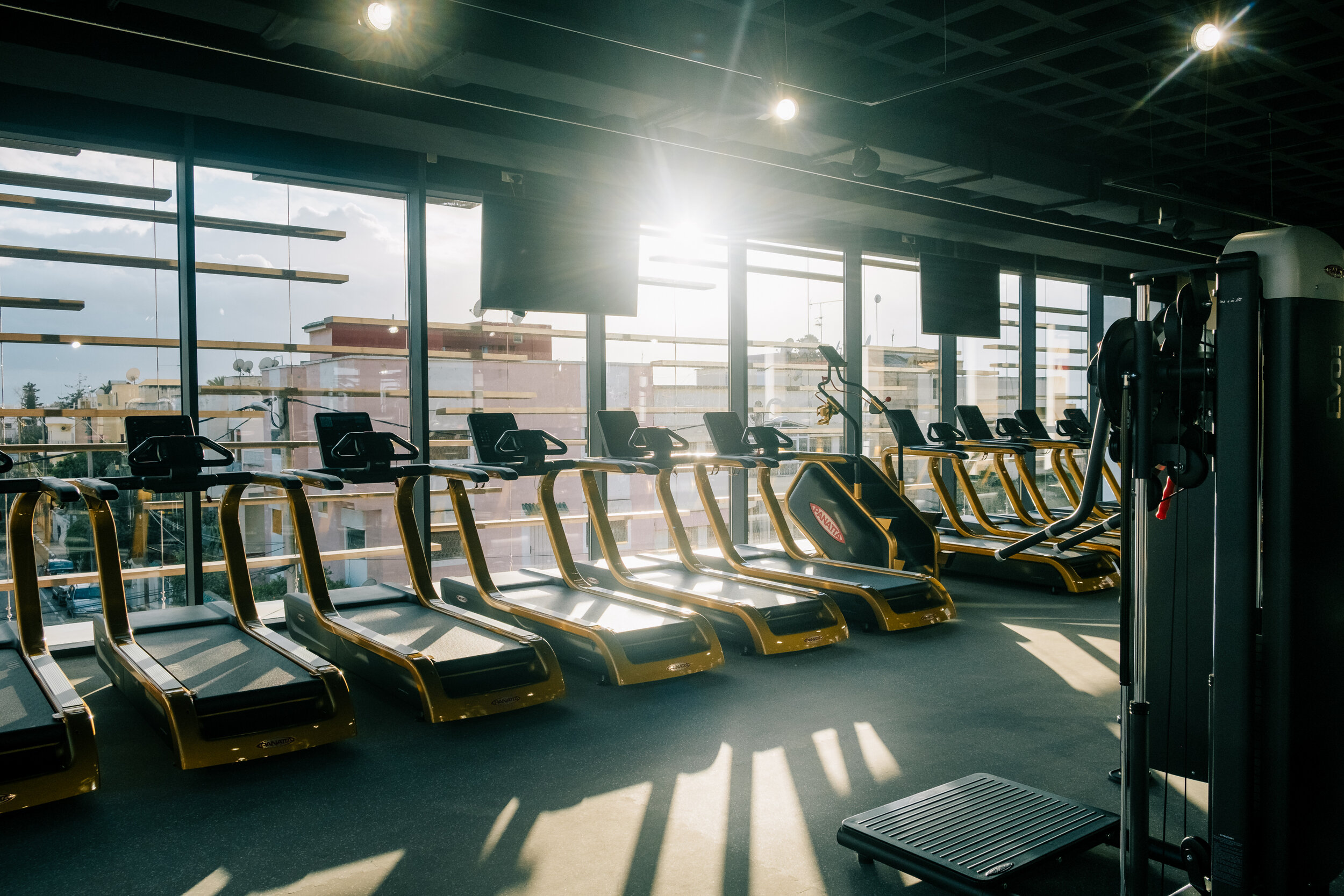
I shot this video with the Fuji X-T30, all handheld in 120fps 1080p using the FUJIFILM XF 18-55mm f/2.8-4 R LM OIS.
1- User experience: This is my main issue with this camera. It is very small, which makes it very fiddly to use. You can easily press the wrong button (I see you Q button, I see you very well) and it is kind of awkward to hold and operate. Granted, those points start to disappear the more you use the camera, but they exist nonetheless. The touchscreen is unpredictable and sometimes pretty unusable. Sometimes, the settings Dials are just buggy and won’t operate normally and you have to turn off the camera for them to reset and be usable again. The analog dial for the shutter speed is cool, but not practical, and can sometimes be annoying. The AF is not always spot-on and in many instances might ruin your shot by the constant hunting and pulsing … or by face locking on a rock or a tree, that happened to me. In short, many of these issues are not native to the X-T30 only but can be found in many FujiFilm bodies (the X-T3 for instance shares many of these quirks with its little sister), and they stem mostly from a lack of consistency in the user experience. Coming from Canon and Sony, what’s great about for example the A7III or the Canon C100 is that they give you consistent results whether in the image or in the camera behavior, which makes them more suitable for professional environments. That being said, those quirks can be deal-breakers for some and manageable for others, it all depends on how you use the camera and for what purpose.
The image in this video is SOOC, because Youness didn’t apply any color correcting or grading.
2- Lowlight capabilities: Again, coming from the Canon C-line and Sony A7 series, it’s very hard to get used to almost unusable images at 6400 ISO. The noise performance is decent for an APS-C camera, but I find that the images quickly lose details when pushing the ISO values. 6400 ISO can definitely be used if exposed correctly, the noise pattern looks more film grain than digital noise which is a good thing, but you really have to pay extra attention when reaching high ISO (starting from 3200 ISO), you may end up with more unusable footage than you think. It also doesn’t help that ISO Values in FujiFilm are 1 stop darker than those in Sony. So even if it’s not bad per se, it's not the best when compared to what other brands offer. That being said, if you pay attention to the exposure and have enough light hitting your sensor, you can
3- Lenses: FujiFilm Lenses are actually great, the F/2 lenses are small, sharp, and reasonably priced. The 18-55 F2,8/4 is an amazing kit lens with great image stabilization. The problem is that those lenses are not the best for video, some have very slow video AF, and all are not great for manual focusing. And on top of all, you don’t have many choices to pick from, and the Fringer adapter (the only good lens adapter) is expensive. So, the lenses are great, if only we had more options for video (and even for photography) or more accessible adapters.
I would like to add that vlogging with the Fuji X-T30 is possible but not convenient ( no flip LCD, AF is ok at detecting faces).
Where does that leave us in regard to shooting videos in the FujiFilm X-T30? If those quirks are no deal breakers for you, and if you want a camera that produces stunning Jpegs and has a very nice and detailed 4K image and 120 fps 1080p all in a small lightweight and low-profile body that you can always carry with you without selling your kidney for it, then I guess the X-T30 is a great little camera that can easily make its way into your heart. I got mine for around 600 USD used with 2 lenses, it’s a bargain !